
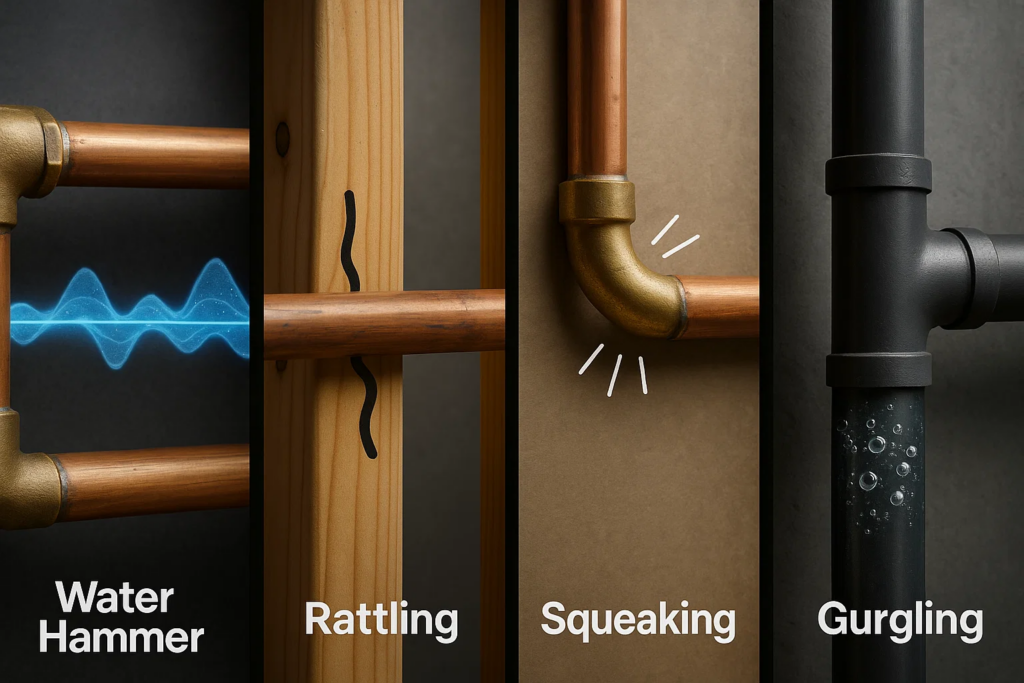
Plumbing Noises
Plumbing noises can be more than just a minor annoyance; they can indicate underlying issues in your home’s plumbing system. Whether it’s a constant drip, a mysterious gurgle, or the dreaded banging of pipes, these sounds can disrupt the peace of your home. Understanding the causes of these noises and knowing how to fix them can save you from potential plumbing disasters and costly repairs.
Common Sources of Plumbing Noises
Banging Pipes
Banging pipes, often referred to as “water hammer,” occur when a faucet or valve is quickly shut off, causing a sudden stop in water flow. This abrupt halt creates a shockwave that rattles the pipes, producing a loud banging noise. Over time, water hammer can cause damage to pipes and joints.
Whistling or Squealing
These high-pitched noises usually occur when water flows through a restricted section of pipe, such as a partially closed valve or a pipe with a buildup of mineral deposits. The restricted flow increases water velocity, leading to the whistling or squealing sound.
Gurgling Drains
Gurgling sounds typically originate from the drainage system. They occur when air is trapped in the pipes or when there is a blockage. As water drains, it displaces air, causing the characteristic gurgling noise.
Dripping Sounds
A dripping sound is often caused by a leaky faucet or pipe. The persistent noise is not only irritating but also indicative of water wastage and potential water damage.
Effective Fixes for Plumbing Noises
Fixing Banging Pipes
1. **Install Water Hammer Arrestors**: These devices absorb the shockwave created when water flow is suddenly stopped, preventing the pipes from banging. Water hammer arrestors are installed near the valves or faucets causing the issue.
2. **Secure Loose Pipes**: Loose pipes can amplify the noise of water hammer. Use pipe clamps or straps to secure pipes to the walls or joists, reducing vibration and noise.
3. **Adjust Water Pressure**: High water pressure can exacerbate water hammer. Use a pressure-reducing valve to maintain water pressure between 40-60 psi, which is ideal for most residential systems.
Silencing Whistling or Squealing Pipes
1. **Check and Adjust Valves**: Ensure all valves are fully open. Partially closed valves can cause increased water velocity, leading to whistling noises.
2. **Clean or Replace Fixtures**: Mineral deposits can narrow the pipe diameter, causing whistling sounds. Clean aerators and showerheads with vinegar to dissolve mineral buildup or replace them if necessary.
3. **Inspect and Replace Worn-out Washers**: A worn-out washer in a faucet can cause whistling or squealing. Disassemble the faucet and replace the washer to eliminate the noise.
Resolving Gurgling Drains
1. **Clear Blockages**: Use a plunger or a plumber’s snake to clear any blockages in the drain. This allows water and air to flow freely, eliminating gurgling noises.
2. **Ventilation Check**: Ensure your plumbing vents are not blocked. Vents allow air to escape, preventing negative pressure that causes gurgling. Clear any debris from vent pipes on the roof.
3. **Install Air Admittance Valves (AAVs)**: If proper venting is not feasible, consider installing AAVs. These devices allow air to enter the drainage system, balancing pressure and preventing gurgling.
Fixing Dripping Sounds
1. **Repair Leaky Faucets**: A common cause of dripping sounds is a leaky faucet. Replace worn-out washers, O-rings, or cartridges in the faucet to stop the leak.
2. **Check for Hidden Leaks**: Inspect under sinks and around appliances for hidden leaks. Look for signs of water damage or mold, and repair any leaks promptly to prevent further damage.
3. **Insulate Pipes**: Sometimes dripping sounds are amplified by pipes expanding and contracting with temperature changes. Insulating pipes can help reduce these noises.
Preventive Measures for Quiet Plumbing
Regular Maintenance
Schedule periodic plumbing inspections to identify and address potential issues before they become major problems. Regular maintenance can help prevent noise and extend the lifespan of your plumbing system.
Update Old Plumbing Systems
Older plumbing systems, especially those with galvanized pipes, can be prone to noise and failure. Consider upgrading to modern materials like PEX or copper, which are quieter and more durable.
Install Pressure Regulators
High water pressure can cause various plumbing noises and damage. Installing a pressure regulator can help maintain optimal water pressure, reducing noise and wear on your plumbing system.
Conclusion
Plumbing noises are not just an inconvenience; they can signal underlying issues that require attention. By understanding the causes of these noises and implementing effective fixes, you can silence your pipes and restore peace to your home. Regular maintenance and timely repairs are key to preventing noise and ensuring the longevity of your plumbing system. Don’t ignore those mysterious sounds—address them promptly for a quieter, more efficient home.
#ChatGPT assisted in the creation of this article.
