
Toilets are essential components of our daily lives, and when they malfunction, they can cause significant inconvenience. Thankfully, you don’t always need to call a plumber to solve common toilet issues. This guide will help you diagnose and repair frequent toilet problems quickly and efficiently, saving you time and money.
Understanding the Basics of Toilet Functionality
Before diving into repairs, it’s important to understand how a toilet works. A standard toilet consists of three main parts: the tank, the bowl, and the flushing mechanism. The tank holds water that’s released into the bowl when you flush. The bowl is the part that holds water and waste. The flushing mechanism, typically a lever or button, triggers the flushing action.
Common Toilet Issues and How to Fix Them
Running Toilet
A running toilet is not only irritating but also wastes water. The most common cause is a faulty flapper or a problem with the fill valve.
Fixing a Flapper
- Turn off the water supply to the toilet.
- Remove the tank lid and inspect the flapper. If it’s worn or damaged, it needs replacement.
- Detach the old flapper from the overflow tube and replace it with a new one.
- Turn the water supply back on and test if the toilet stops running.
Adjusting the Fill Valve
- If the flapper is not the issue, check the fill valve. It controls the water level in the tank.
- Adjust the fill valve float by bending the arm or turning the adjustment screw until the water stops at the correct level.
Clogged Toilet
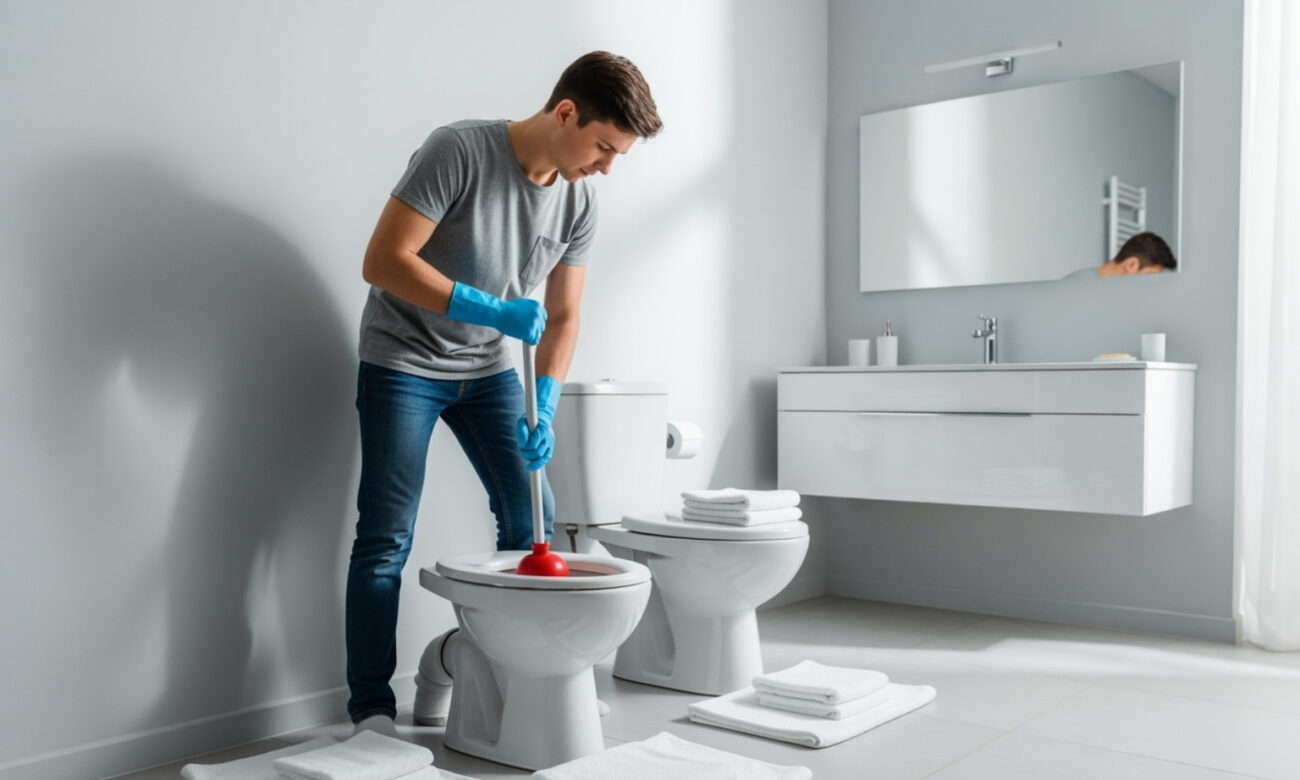
A clogged toilet is one of the most common plumbing problems and can usually be fixed with a plunger.
Using a Plunger
- Choose a flange plunger, which is designed to fit toilets.
- Insert the plunger into the toilet bowl, ensuring it covers the drain hole completely.
- Push down and pull up with force to create suction. Repeat several times until the clog is cleared.
Using a Toilet Auger
- If the plunger doesn’t work, use a toilet auger.
- Insert the auger into the bowl and crank the handle to extend the cable into the drain.
- Continue cranking until you feel resistance, then crank in the opposite direction to pull the clog out.
Weak Flush
If your toilet doesn’t flush with enough force, it might be due to a low water level in the tank or a blockage in the rim holes.
Adjusting Water Level
- Check the water level in the tank. It should be about an inch below the overflow tube.
- If it’s lower, adjust the fill valve or float to allow more water into the tank.
Cleaning Rim Holes
- Mineral deposits can block rim holes, reducing flush strength.
- Use a wire hanger or a specialized toilet bowl cleaner to clean out the holes under the rim.
Leaking Toilet
Leaks can occur from various parts of the toilet, often leading to water damage and increased bills.
Checking the Wax Ring
- If water pools around the toilet’s base, the wax ring might be compromised.
- Turn off the water supply and drain the toilet.
- Remove the toilet and inspect the wax ring. Replace it if it’s damaged.
Inspecting the Tank Bolts
- Leaking from the tank could be due to loose or damaged bolts.
- Tighten the bolts gently, ensuring not to crack the porcelain.
- If the leak persists, consider replacing the bolts and washers.
Preventive Maintenance Tips
Regular Inspections
Conduct regular inspections of your toilet to catch problems early. Check for leaks, ensure the fill valve and flapper are functioning properly, and address any signs of wear and tear.
Keep the Toilet Clean
Regular cleaning prevents mineral buildup and helps maintain the toilet’s functionality. Use a mild cleaner and a toilet brush to scrub the bowl and clean the rim holes.
Avoid Flushing Non-Flushable Items
To prevent clogs and other issues, only flush toilet paper and human waste. Avoid flushing items like wipes, sanitary products, and paper towels.
When to Call a Professional
While many toilet issues can be resolved with DIY methods, some situations require professional intervention. Call a plumber if:
- The problem persists despite your best efforts.
- There’s a significant leak that you can’t locate or fix.
- You’re uncomfortable handling certain repairs, such as replacing the toilet or dealing with complex plumbing systems.
Conclusion
Toilet issues can be inconvenient, but many common problems can be addressed with simple repairs. By understanding how your toilet works and knowing how to fix basic issues, you can save time and money. Remember to perform regular maintenance to keep your toilet functioning optimally, and don’t hesitate to call a professional if needed. With this guide, you’re now better equipped to tackle toilet troubles with confidence.
#ChatGPT assisted in the creation of this article.
